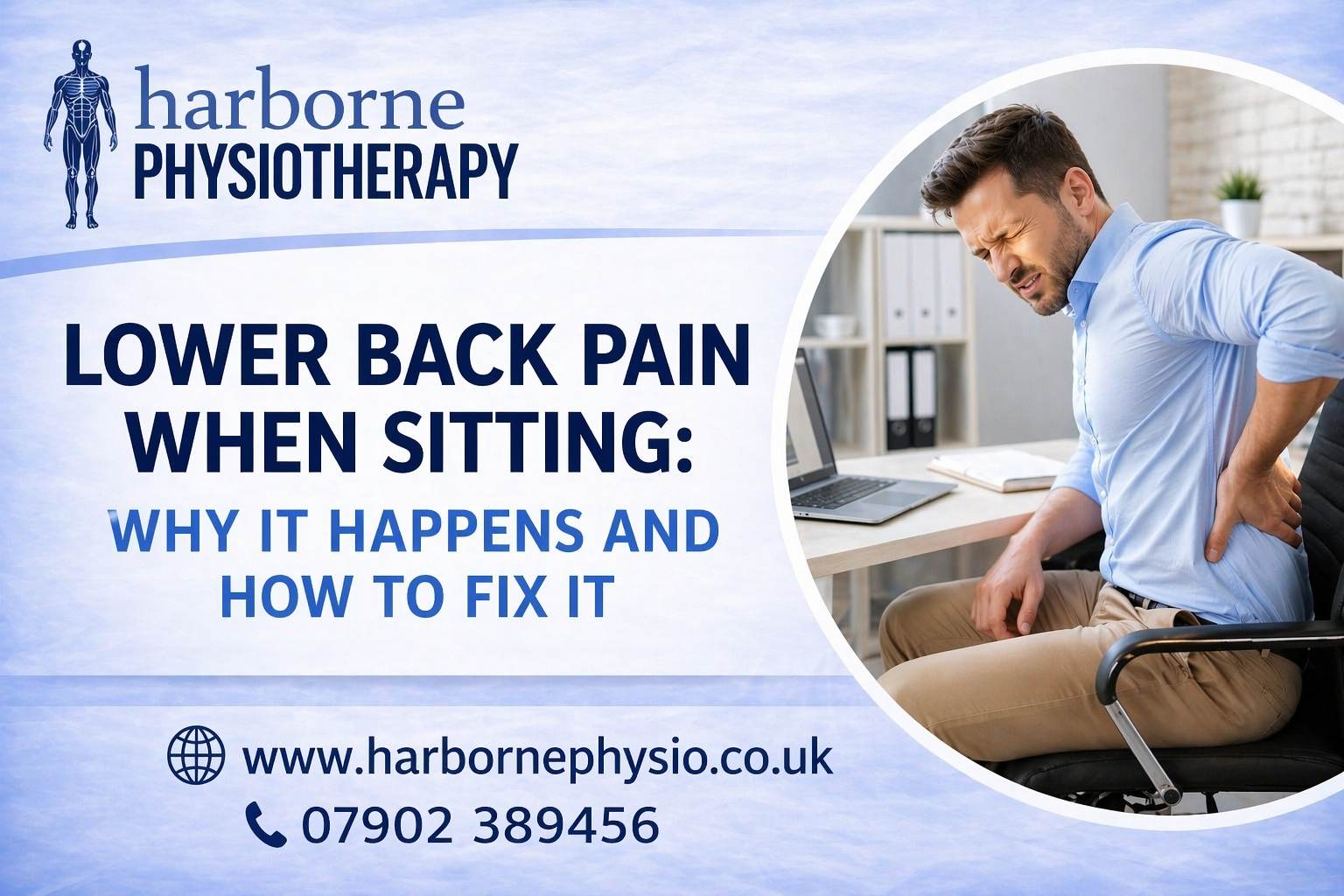
Harborne Physiotherapy explains why sitting causes lower back pain and what you can do to relieve it
Lower Back Pain When Sitting: Why It Happens and How to Fix It
Lower back pain when sitting is one of the most common problems we see at Harborne Physiotherapy.
Many people notice it most:
At a desk
Driving
On the sofa in the evening
It can feel like a dull ache, stiffness, or even sharp discomfort that builds the longer you sit.
The frustrating part is that rest doesn’t always help—and sometimes sitting actually makes it worse.
Why Does Sitting Cause Back Pain?
Your body is not designed to stay in one position for long periods.
When you sit for extended periods:
Muscles become stiff
Joints are under constant load
Circulation reduces
Posture gradually deteriorates
Over time, this creates stress through the lower back.
The Most Common Causes We See
1. Prolonged Sitting
Even with “good posture,” sitting for hours without movement increases pressure through the lumbar spine.
2. Poor Movement Habits
It is not just about posture—it is about how often you move.
Many people stay in one position for too long without realising it.
3. Reduced Hip Mobility
Tight hips can increase strain on the lower back, especially when sitting.
This is very common in:
Desk-based workers
Drivers
Gym-goers who skip mobility work
4. Core and Muscle Control
The muscles that support your spine may not be working efficiently.
This does not mean they are “weak”—they may simply not be coordinating well.
5. Stress and Tension
Stress can increase muscle tension, particularly through the lower back and surrounding areas.
What Actually Helps?
1. Movement Breaks
The most effective change is simple:
Move more often.
Even standing up or walking for a few minutes every 30–60 minutes can make a big difference.
2. Changing Positions
There is no perfect posture.
The key is variation:
Sit
Stand
Walk
Shift positions regularly
3. Improving Hip Mobility
Simple mobility exercises can reduce strain on the lower back and improve comfort when sitting.
4. Strength and Control Work
Targeted exercises can improve how your body supports your spine during daily activities.
5. Desk and Work Setup
Small adjustments can help:
Screen height
Chair position
Foot support
But remember—setup alone will not fix the problem without movement.
When Should You Get Help?
You should consider assessment if:
Pain is persistent or worsening
Sitting is becoming uncomfortable daily
Pain is affecting work or sleep
You are unsure what is causing it
Key Takeaway
Lower back pain when sitting is extremely common—but it is rarely caused by just one thing.
In most cases, it is a combination of:
Too much time in one position
Reduced movement
Muscle and joint stiffness
The good news is that it is very treatable with the right approach.
How We Can Help
At Harborne Physiotherapy, we assess:
Movement patterns
Strength and mobility
Daily habits and workload
We then create a clear, personalised plan to help you move better and reduce pain.
Ready to Take the Next Step?
If sitting is causing you ongoing back pain, we can help.
Book here:
https://www.harbornephysio.co.uk
Author:
Harborne Physiotherapy Team